Products

Chain Spares

Chain Spares

Genuine replacement components for all standard chain sizes

ANSI Compatible
DIN / ISO Compatible
All Sizes Available
Fast Dispatch
Chain Spares

Chain Connecting Link

Spring Clip & Cotter Pin Types — All Chain Sizes

Boyka Chain's connecting links are precision-manufactured to match every standard roller chain and conveyor chain size. Available in spring clip (snap-lock) and cotter pin configurations, these connecting links provide a secure, reliable joint that maintains full chain strength and pitch accuracy. Compatible with ANSI, DIN, ISO, and BS chain standards.

Spring Clip Type Quick release for maintenance
Cotter Pin Type Secure for heavy duty use
ANSI / DIN / ISO All standards covered
All Pitch Sizes 6.35mm to 76.2mm pitch
Compatible Chain Size (Pitch):
Sold individually or in packs of 10 / 25 / 50. Mention quantity in your enquiry.
Call Now
Fast Dispatch Quality Guaranteed Expert Support

Product Overview

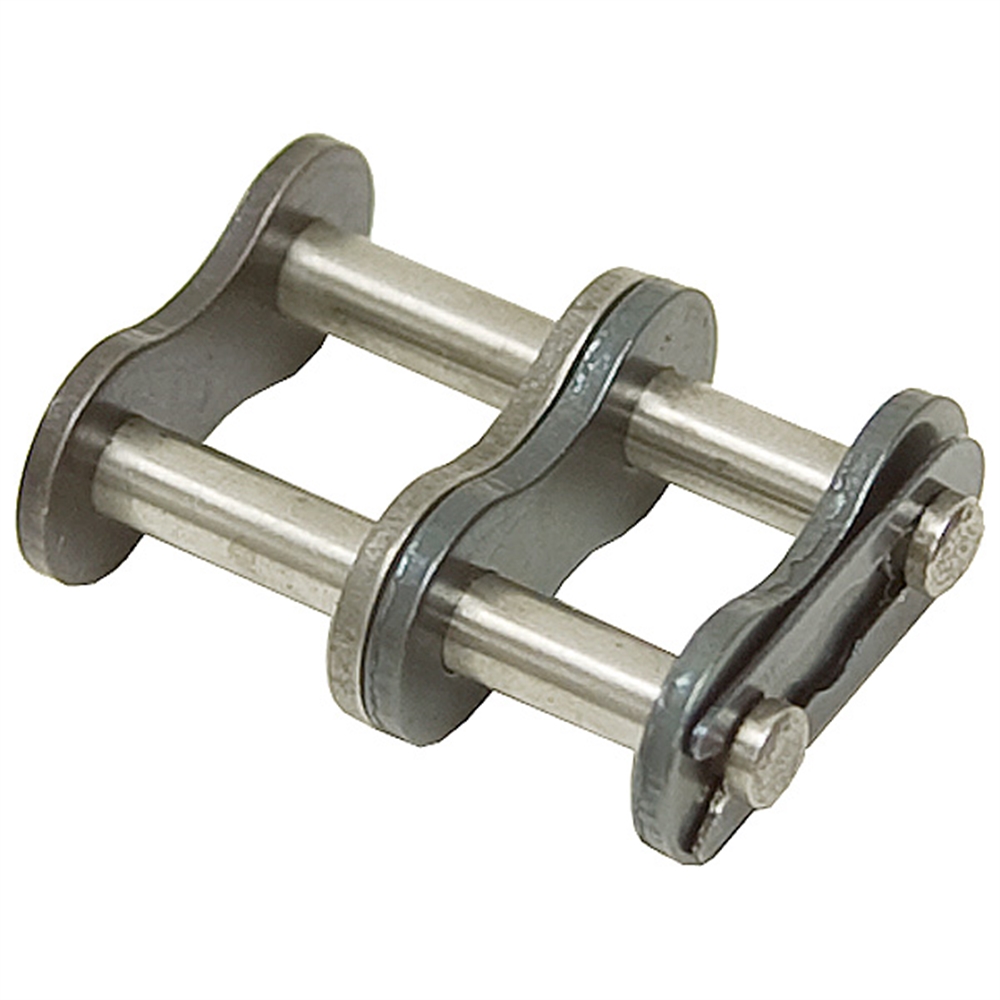
The Chain Connecting Link (also known as a master link) is the component used to join two ends of a roller chain into a continuous loop. Boyka Chain manufactures connecting links from the same high-grade alloy steel used in our roller chains, ensuring the connecting link is never the weak point in your chain drive.

Each link is dimensionally matched to its chain size, with precision-ground pins, outer link plates, and either a spring clip or cotter pin retaining method. Hardness and tensile strength are verified by batch testing before dispatch.

Two Retaining Types

Spring Clip (Snap-lock) Type

Uses a U-shaped spring clip that snaps into grooves on the pin ends. Fast to install and remove without tools — ideal for frequent maintenance situations and lighter-duty drives.

Cotter Pin (Split Pin) Type

Uses split cotter pins inserted through holes in the pin ends and bent to lock in place. More secure than spring clips and recommended for high-load, high-speed, or vibrating applications.

Feature Spring Clip Cotter Pin
Installation SpeedFast — no tools neededSlower — pliers needed
Removal SpeedFastSlower
SecurityGoodExcellent
High Speed DrivesSuitable up to moderate speedsRecommended
Heavy Load / ShockModeratePreferred
ReusabilityLimited (clip may weaken)Replace pin each time

Key Features

  • Matched to chain pitch and inner width precisely
  • Same alloy steel as chain body
  • Heat-treated outer link plates
  • Case-hardened precision pins
  • Available for simplex, duplex and triplex chains
  • Stainless steel option available
  • Sold individually or in bulk packs
  • Compatible with all Boyka Chain roller chains

Standards

ANSI B29.1 DIN 8187 ISO 606 BS 228 JIS B1801

Pack Sizes

×1 Single
×10 Pack of 10
×25 Pack of 25
×50 Best Value
Chain No. Pitch (mm) Roller Dia (mm) Inner Width (mm) Pin Dia (mm) Spring Clip Cotter Pin Breaking Load (kN)
256.353.303.182.31 3.1
359.5255.084.783.59 8.0
4012.707.927.853.97 14.1
5015.87510.169.405.09 21.8
6019.0511.9112.575.96 31.3
8025.4015.8815.757.94 55.6
10031.7519.0518.909.54 86.7
12038.1022.2325.2211.11 125.0
16050.8028.5831.5514.29 222.0

Connecting links available for duplex and triplex chains on request. Breaking load is equivalent to the corresponding chain's rated load.

Chain No. Pitch (mm) Roller Dia (mm) Inner Width (mm) Pin Dia (mm) Spring Clip Cotter Pin Breaking Load (kN)
06B-19.5256.355.723.28 9.0
08B-112.708.517.754.45 18.0
10B-115.87510.169.655.09 22.2
12B-119.0512.0711.685.72 29.0
16B-125.4015.8817.028.28 60.0
20B-131.7519.0519.5610.19 95.0
24B-138.1025.4025.4014.63 160.0
32B-150.8029.2130.9917.81 250.0

Stainless steel (SS304/SS316) connecting links available for food-grade and corrosive environments. Please specify when enquiring.

Installing a Spring Clip Connecting Link

1

Thread the pins

Pass the two pins of the outer link plate through the inner link ends of the open chain. Make sure both pins pass through cleanly and the outer plate sits flush against the inner links.

2

Position the spring clip

Place the spring clip over the pin ends with the open end of the clip facing away from the direction of chain travel. This is critical — if the clip faces the wrong direction it can work itself loose.

3

Snap the clip into the grooves

Using snap-ring pliers or a flat screwdriver, press the spring clip into the pin grooves until it seats fully. Both ends of the clip must sit within the groove — check by lightly pulling the clip.

4

Verify and test

Spin the chain manually and inspect the link under slight tension. The spring clip should not move. Replace the clip with a new one if it shows any sign of deformation — never reuse a clip that has been removed.

Installing a Cotter Pin Connecting Link

1

Thread the outer plate and pins

Insert both pins through the inner link ends and onto the outer link plate. Ensure the plate is fully seated against the inner links with no gap.

2

Insert cotter pins

Push a new cotter pin through the hole at the end of each link pin. Use only new cotter pins — never reuse bent pins as they may fail under load.

3

Bend the cotter pin legs

Using flat-nose pliers, bend one leg of each cotter pin at 90° away from the other. Separate the legs sufficiently to prevent the pin from backing out under vibration.

4

Final inspection

Check both cotter pins are fully bent. Rotate the chain to confirm the link moves freely with no binding. Verify the outer plate is flush and all pins are secure before running the drive.

Important Safety Note

Always replace the connecting link with a new one each time the chain is opened. Never reuse a spring clip — once removed its clamping force is reduced. For drives above 1000 RPM or under shock loading, use the cotter pin type only.

A chain connecting link (master link) is a special outer link used to join the two open ends of a roller chain into a continuous loop. It consists of an outer link plate, two pins, and a retaining clip or cotter pin. It is dimensionally identical to a standard outer link but is designed to be assembled and disassembled without special tools.

Choose the spring clip type for easy, tool-free maintenance access on drives running at moderate speeds and loads. Choose the cotter pin type for high-speed drives (above 1000 RPM), heavy loads, shock-loaded applications, or anywhere vibration is present. When in doubt, the cotter pin type is the safer choice.

We do not recommend reusing connecting links. Spring clips lose their clamping force after removal and may not seat correctly when refitted. Cotter pins must always be replaced with new ones as bending weakens the material. Always fit a fresh connecting link whenever the chain is opened.

Yes — as long as the chain conforms to the same standard (ANSI, DIN/ISO, BS), our connecting links will be dimensionally compatible. The chain number (e.g. 08B-1 or ANSI 50) determines the dimensions. If your chain is non-standard or from a specialised manufacturer, please contact us with the chain details.

Yes. We supply connecting links for simplex (single strand), duplex (double strand), and triplex (triple strand) chains across all standard sizes. Please specify the strand count when placing your order or enquiry.

Yes. SS304 and SS316 stainless steel connecting links are available for food processing, pharmaceutical, and corrosive environment applications. Please mention your requirement when enquiring and specify the chain standard and size.

Get a Quote

Order Connecting Links

Tell us your chain size, type (spring clip or cotter pin), quantity and standard — we'll get back to you with pricing within 24 hours.

Call Us Directly +91-9899722001
Response Time Within 24 Hours

Send Your Enquiry

Send Enquiry

Chain Connecting Link

Zoomed
Get In Touch

Ready to Work With Us?

We deliver precision-engineered chains and sprockets built to your exact specification. Let's talk about your requirements.